

Skip to content
StrikeCyberStrikeCyber
Capability

Adversary Simulation

StrikeCyber emulates specific threat actors end to end, replicating their tactics, techniques and procedures against your environment to measure how quickly your team detects, responds to and contains a real attack.

StrikeCyber's adversary simulation emulates the exact threat actors most likely to target your organisation, running their playbook end to end against your defences. Unlike a standard test, we measure how well your people, processes and technology actually detect, respond to and contain a real attack.

Real Attackers Do Not Wait for Your Annual Test

Australian organisations are no longer facing opportunistic hackers alone. They face organised ransomware crews, initial access brokers and state-aligned groups that follow repeatable, well-documented playbooks. Knowing your systems have vulnerabilities is not the same as knowing whether you would detect and stop the group actually coming for you.

Adversary simulation answers the question that keeps boards awake: if a real threat actor targeted us today, would we see it, and could we stop it in time? It draws on the threat intelligence that tells us which adversaries to emulate, extends our red teaming and penetration testing capability, and reflects our AI-driven offensive security approach. Get in touch to scope an exercise.

  • Ransomware operators move from initial access to encryption faster than many teams can triage a single alert.
  • Attackers increasingly live off the land, abusing legitimate tools so traditional signature-based detection misses them.
  • Regulatory and cyber-insurance expectations now demand demonstrable detection and response capability, not just controls on paper.
  • Generative AI has accelerated phishing, social engineering and exploit development, compressing the time defenders have to react.
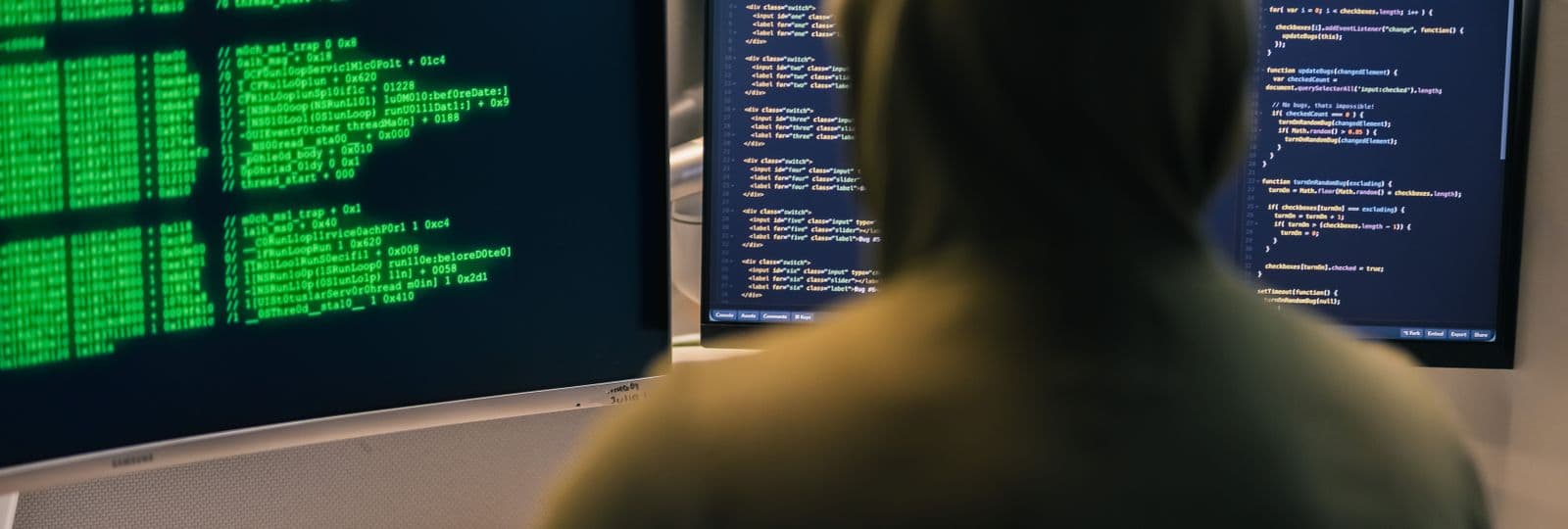
An operator working across code and terminal screens
Adversary Simulation

Testing detection and response against real tradecraft.

In detail

How Continuous Adversary Simulation Works

We emulate a chosen threat actor's full attack chain under controlled, safe conditions, with every phase testing a different part of your defence and detection stack.

01

Initial Access And Social Engineering

We probe the human and technical entry points a real attacker would use first. This is where most breaches begin, so it is where realistic emulation starts.

Our methodology

Operators run targeted phishing, spear-phishing, vishing and smishing, business email compromise, and rogue device or USB drop testing. Each technique is planned to mirror how the emulated actor gains its first foothold, then measured against your controls and your people.

  • Phishing
  • Social Engineering
  • BEC
  • Initial Access
02

Perimeter Breach And Cloud Exploitation

We test the internet-facing surface that adversaries scan and exploit to get inside. This covers on-premise assets and cloud services alike.

Our methodology

We exploit internet-facing assets, misconfigurations, and VPN and firewall weaknesses, and probe exposed cloud services across AWS, Azure and GCP. Findings feed directly into the wider attack chain rather than being reported in isolation.

  • Perimeter
  • Cloud
  • Misconfiguration
  • VPN/Firewall
03

Active Directory And Privilege Escalation

Once inside, adversaries chase the credentials and permissions that unlock high-value systems. We replicate that push toward domain control.

Our methodology

We execute Kerberoasting, NTLM relay, Pass-the-Hash, service account takeover and Golden Ticket attacks, and abuse weak permissions and policies. Every action is mapped to MITRE ATT&CK so you see which privilege escalation behaviours your controls caught.

  • Active Directory
  • Privilege Escalation
  • Kerberoasting
  • MITRE ATT&CK
04

Lateral Movement And Persistence

We move through your environment as the real adversary would, quietly expanding access and establishing footholds that survive a reboot or a password reset.

Our methodology

Operators use credential dumping, session hijacking, living-off-the-land techniques and covert command-and-control frameworks, then establish persistence via scheduled tasks, registry changes and backdoors. Your team's detection is measured at each step.

  • Lateral Movement
  • Persistence
  • Living Off The Land
  • C2
05

Data Exfiltration And Impact

We test the final stage of a real attack: stealing data or triggering ransomware impact. This is done in controlled, non-destructive ways.

Our methodology

We simulate ransomware and file encryption, covert exfiltration over DNS tunnelling and encrypted channels, and test your data loss prevention and backup resilience. Detection, containment and recovery are all evaluated against the emulated actor's playbook.

  • Exfiltration
  • Ransomware
  • DLP
  • Backup Resilience
06

Detection, Response And Purple Team Validation

The core measure of a simulation is not what we broke but what your team saw. We evaluate how quickly your defenders detected, investigated and contained the activity.

Our methodology

We assess SOC monitoring, SIEM and EDR visibility and alerting, and track mean time to detect and mean time to respond across key stages. Where you choose, we run a purple team session so our operators and your blue team tune detections live as gaps are found.

  • Detection
  • MTTD/MTTR
  • Purple Team
  • SOC/SIEM
AI-augmented methodology

Machine Speed, Operator Judgement

Automation covers the volume so our operators can spend their time where human judgement wins. Every result is verified by an expert before it reaches you.

Our work aligns to recognised standards including the OWASP Testing Guide and ASVS, PTES, NIST SP 800-115, OSSTMM and MITRE ATT&CK.

How the platform works
01

Continuous reconnaissance

Continuous mapping of your external attack surface, surfacing new exposures the moment they appear.

02

AI-assisted exploit chaining

Individual weaknesses connected into realistic, high-impact attack paths a real adversary would take.

03

Continuous validation

Findings reflect your live environment, not a stale snapshot, so you act on what is true today.

04

AI-accelerated reporting

Evidence turned into clear, prioritised guidance in a fraction of the usual time, every result human-verified.

How an engagement runs

A tested process, not a black box

Every StrikeCyber engagement follows the same disciplined path, so you always know where you are and what comes next.

  1. 01

    Scope & kick-off

    We agree targets, rules of engagement, timing and success criteria. No surprises, fixed scope, fixed price.

  2. 02

    Offensive testing

    AI-augmented reconnaissance and manual exploitation across your networks, applications, cloud and people.

  3. 03

    Real-time critical alerts

    Anything critical or actively exploitable is escalated the moment we find it, not weeks later in a report.

  4. 04

    Report & debrief

    A prioritised report with reproducible steps and a live debrief for your technical and executive stakeholders.

  5. 05

    Retest & validate

    Once you remediate, we retest to prove the fix holds. Typically one business day per component.

What you receive

Deliverables Built to Be Acted On

Reports engineers can execute against and boards can understand, backed by a live portal from kick-off to retest.

01

Prioritised findings

Every issue ranked by real-world risk and exploitability, not raw scanner severity, so your team fixes what matters first.

02

Reproducible evidence

Step-by-step proof and artefacts for each finding, so engineers can confirm, reproduce and remediate without guesswork.

03

Risk ratings & impact

Clear likelihood and business-impact ratings, mapped to CVE identifiers and the controls behind each weakness.

04

Remediation guidance

Practical, environment-specific fixes and hardening advice, written for your stack and your tooling.

05

Board-ready summary

An executive briefing that translates technical risk into business language for leadership and directors.

06

Live client portal

Track findings, remediation status and retests in real time, with critical issues escalated the moment we find them.

FAQ

Adversary Simulation FAQs

What is adversary simulation?

Adversary simulation, sometimes called threat emulation, is a controlled exercise where security professionals replicate the full attack chain of a specific real-world threat actor against your organisation. Rather than only finding vulnerabilities, it measures whether your people, processes and technology can detect, respond to and contain that adversary's tactics, techniques and procedures.

How is adversary simulation different from a one-off penetration test or red team?

[Penetration testing](/solution/penetration-testing/) finds and exploits vulnerabilities in a defined scope to show what is exploitable, and a one-off test is a point-in-time snapshot. [Red teaming](/solution/red-teaming/) is a broad, objective-based assessment of your overall resilience. Adversary simulation is more specific and can run continuously: we emulate one chosen threat actor's known TTPs end to end, so you learn how you would fare against that particular group and how your detection improves over time, rather than against a generic attacker on a single date.

What is a purple team exercise?

A purple team exercise brings our offensive operators (red) and your defenders (blue) together to work collaboratively. As we execute each technique, your team observes, tunes detections and validates response in real time. It turns a simulation into a hands-on training and improvement session, closing gaps as they are discovered rather than only reporting them afterwards.

How do you measure detection and response?

We track measurable outcomes at each stage of the attack, including mean time to detect (MTTD) and mean time to respond (MTTR), which alerts fired, and which techniques went unnoticed. Because every action is mapped to MITRE ATT&CK, you get a clear picture of exactly which adversary behaviours your controls caught and which they missed.

Is adversary simulation safe to run against production systems?

Yes. Every engagement is governed by agreed rules of engagement, escalation procedures and communication protocols. Our expert operators maintain strict operational safety, avoid actions that could disrupt production, and pause or adjust immediately if a genuine risk emerges. Simulated ransomware and exfiltration are conducted in controlled, non-destructive ways.

How do we get started?

We begin by understanding your environment and the threats most relevant to your sector, often informed by our [threat intelligence](/solution/threat-intelligence/) service, then scope a simulation around a realistic adversary. To get started, [get in touch](/get-in-touch/) or call 1300 654 898.

Ready to take the offensive?

StrikeCyber specialises in penetration testing and red teaming engagements that deliver actionable findings. Connect with us for a free consultation.

No obligation, no sales pressure. A senior operator replies within one business day.

1300 654 898Free Consultation